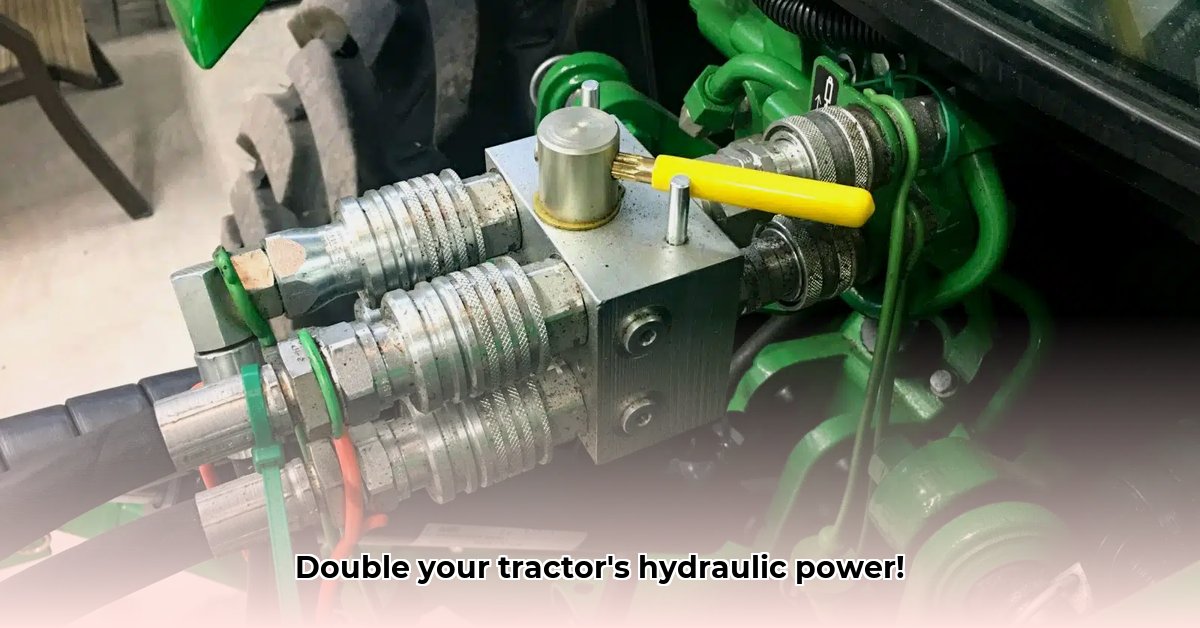
Hydraulic Multipliers for Tractors: A Comparative Review and Installation Guide
Want to significantly increase your tractor's versatility and efficiency? A hydraulic multiplier can be the answer. These devices effectively double (or even triple) your tractor's hydraulic outlets, allowing you to operate multiple implements simultaneously. This guide provides a detailed comparative review of hydraulic multipliers, covering installation, different models, and crucial considerations for making an informed purchase. For more information on PTO-driven equipment, check out this helpful resource: PTO Sprayer Info.
Understanding Hydraulic Multipliers
A hydraulic multiplier acts as a clever splitter for your tractor's hydraulic system. Instead of a single output, it provides two (or more) independent hydraulic circuits, each with its own set of outlets. This allows you to run a front-end loader and a backhoe, for example, without switching between attachments. Some even use them to power a trailer jack, allowing you to raise or lower the trailer while continuing to work with other equipment.
Choosing the Right Hydraulic Multiplier: Direct vs. Remote Mount
Two main types of hydraulic multipliers exist: direct-mount and remote-mount. Both significantly increase your tractor's hydraulic capabilities although they differ in application and installation.
Direct-Mount Multipliers: These units connect directly to your tractor's existing hydraulic system. This simplifies installation but limits placement options. Consider this option if space is restricted.
Remote-Mount Multipliers: These require additional hydraulic lines, providing flexibility in placement. Installation is more complex, but it provides better positioning control, letting you optimally situate the multiplier for easier access and improved cable management.
Step-by-Step Installation Guide
While specific instructions vary by manufacturer, the general process remains consistent. Always consult your multiplier's manual for detailed, model-specific directions.
Step 1: Preparation is Key. Review your tractor's owner's manual and gather the necessary tools (wrenches, hydraulic tools, hoses, fittings). Safety glasses and gloves are essential.
Step 2: Secure Mounting. Carefully mount the multiplier to your tractor according to the manufacturer's instructions; ensuring secure fastening is paramount for safe operation.
Step 3: Connect Hydraulic Lines. Connect all hydraulic lines meticulously, double-checking each connection for leaks. Hydraulic fluid leaks are dangerous and costly to clean.
Step 4: Electrical Connections (If Applicable). Some multipliers use solenoid valves requiring electrical connections. Follow the wiring diagram precisely.
Step 5: Bleed the Air. After installation, air trapped in the system needs to be bled out to ensure proper functionality. The instruction manual will contain the bleeding procedure.
Step 6: Thorough Testing. Begin with slow operation, carefully testing each hydraulic circuit independently to detect leaks, unusual noises, or malfunctions.
Comparing Popular Hydraulic Multiplier Brands
The following table compares features of hypothetical "Brand A" and "Brand B" multipliers. Always check manufacturer specifications before purchasing.
| Feature | Brand A | Brand B |
|---|---|---|
| Warranty | 1 Year | 6 Months (Extended warranty may be available) |
| Coupler Type | ISO 5675/Pioneer Style (adapters may be available) | Multiple connector options (check specifications) |
| Electrical Options | 12V and 24V DC solenoid valves | 12V DC only (24V aftermarket upgrades possible) |
| Manufacturer Info | Readily available on their website | Information availability varies |
Advantages and Disadvantages
Advantages:
- Increased Efficiency: Operate multiple implements concurrently, significantly boosting productivity.
- Enhanced Versatility: Expand your tractor's capabilities.
- Cost-Effectiveness: Generally more affordable compared to buying a new tractor with increased hydraulic capacity.
Disadvantages:
- Added Complexity: More components increase the potential for malfunctions.
- Potential for Leaks: Improper installation or component wear can lead to leaks.
- Technical Installation: May require mechanical aptitude or professional assistance.
Safety Precautions
Always prioritize safety. High-pressure hydraulic fluid is hazardous. Consult a professional if you have any doubts about the installation process.
Is a Hydraulic Multiplier Right for You?
A hydraulic multiplier can significantly enhance your farming operations, but careful consideration is crucial. Evaluate your needs, ensure compatibility with your tractor, and prioritize safe installation. The increased efficiency and versatility it offers can make it a worthwhile investment.
How to Choose the Best Hydraulic Multiplier Kit
Three Pivotal Points:
- Compatibility: Verify that the multiplier is compatible with your tractor's hydraulic system.
- Flow Rate: Ensure that the multiplier's flow rate meets or exceeds your needs.
- Installation: Choose a model with an installation process that matches your skills and comfort level.
Matching Your Tractor's Needs
Before selecting a multiplier, assess your current and future implement needs. Will you be running additional equipment? Does this equipment have specific hydraulic requirements? Understanding these parameters is crucial to selecting an appropriately sized and designed multiplier kit.
Key Features to Consider
The number of additional hydraulic outlets, maximum flow rate, tractor compatibility, build quality, and warranty are key aspects to weigh carefully. Additional features, such as specific coupler types and electrical options (12V or 24V solenoid valves), often determine compatibility with existing implements.
Decision Matrix: Comparing Hydraulic Multiplier Kits
| Kit Model | Number of Outlets | Max. Flow Rate (GPM) | Tractor Compatibility | Price ($) | Ease of Installation |
|---|---|---|---|---|---|
| Kit A | 2 | 20 | John Deere, Kubota | 300 | Easy |
| Kit B | 4 | 30 | Versatile | 500 | Moderate |
| Kit C | 6 | 40 | Most models | 700 | More Challenging |
Remember that this table represents hypothetical kits. Consult manufacturer specifications for accurate details.
Remember to prioritize safety throughout the installation process and operation of hydraulic systems. If unsure about any aspect, consult a qualified technician.